
/spirale/IMPASTATRICE%20SPIRALE%20ASM%20EVO%20RB/IMPASTATRICE%20SPIRALE%20ASM%20EVO%20RB-36x36w.jpg)














Italian Bread: Tradition, Aroma, and New Flavors of Modern Cuisine
# Italian Bread: Tradition, Aroma, and New Flavors of Modern Cuisine
Italy is a country where bread is not merely a food staple, but an integral part of the national culture. From the crispy *ciabatta* to the aromatic *focaccia*, every region preserves its own unique bread-making secrets. Traditional recipes are passed down from generation to generation, yet today, modern variations are also gaining increasing popularity—featuring ingredients such as olives, tomatoes, and yogurt, or utilizing techniques like long, cold fermentation.
## Why is Italian bread so special?
The primary secret lies in the simplicity of the ingredients and the proper preparation of the dough. Italians rarely add overly complex ingredients. The foundation is almost always the same:
* high-quality flour;
* water;
* yeast or sourdough starter;
* extra virgin olive oil;
* salt.
This simplicity creates an intense flavor and a crispy crust. Among the most famous varieties are:
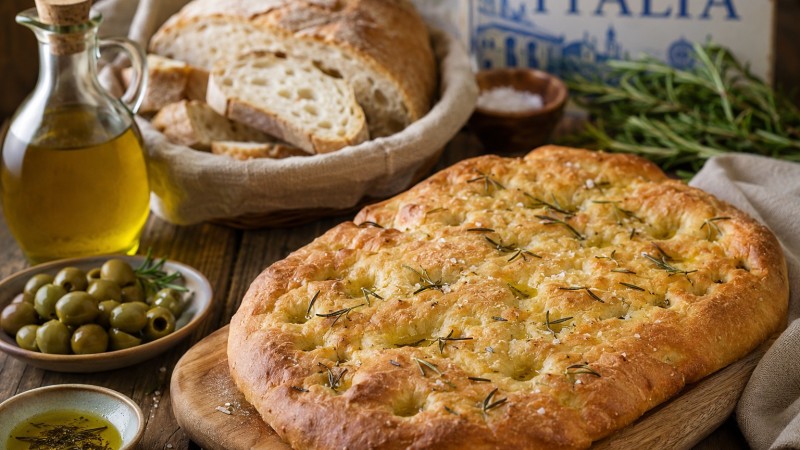
* Focaccia
* Ciabatta
* Piadina
* Grissini (Breadsticks)
Traditional *focaccia* has been known since the days of Ancient Rome, while *ciabatta* has become the quintessential symbol of soft bread characterized by its large, open air pockets.
---
# Recipe for Fresh Italian Bread: “Focaccia”
## Ingredients
* 500 g wheat flour
* 350 ml lukewarm water
* 7 g active dry yeast
* 2 tablespoons extra virgin olive oil
* 1 teaspoon salt
* fresh rosemary
* coarse sea salt
## Preparation
### 1. Preparing the Dough
Mix the water and yeast together, then let the mixture rest for 10 minutes. Next, add the flour, salt, and olive oil.
### 2. Kneading
Knead the dough for approximately 10 minutes until it reaches a soft, elastic consistency. ### 3. Proofing
Cover with a tea towel and let rest in a warm place for 1–1.5 hours.
### 4. Shaping the Focaccia
Transfer the dough to a baking sheet, gently spread it out with your hands, and create the classic dimples using your fingers.
### 5. Topping
Drizzle with olive oil, and sprinkle with rosemary and coarse sea salt.
### 6. Baking
Bake in an oven at 220°C for 20–25 minutes until the surface is golden brown.
The result will be a bread that is soft on the inside and crispy on the outside, with an intense aroma of olive oil. This is considered the classic homemade version of Italian bread.
---
# Traditional Bread vs. Modern Recipes: Which Is Better?
Today, bakers' opinions are divided.
## Why Many Choose Traditional Bread
Traditional recipes are prized for:
* their natural flavor;
* their minimal number of ingredients;
* their long fermentation process;
* their truly crispy crust.
Particularly popular are salt-free Tuscan bread and the classic, high-hydration ciabatta.
## Why Modern Recipes Are Becoming More Popular
New versions of bread offer:
* a softer texture;
* additional ingredients such as cheese, tomatoes, and aromatic herbs;
* quicker preparation;
* original and creative flavors.
Modern bakers are increasingly utilizing cold fermentation and natural sourdough starters to blend tradition with innovation.
---
# Conclusion
Traditional Italian bread remains a symbol of quality and authentic Italian cuisine. However, modern recipes make bread-making more varied and accessible, even at home.
If you wish to capture the atmosphere of old-world Italy, choose a classic focaccia or a traditional ciabatta. If, however, you love to experiment, you can add olives, cheese, garlic, or sun-dried tomatoes and create your own personalized artisanal bread.
Leave a Comment